
Common Chimney Problems in Older St. Louis Homes
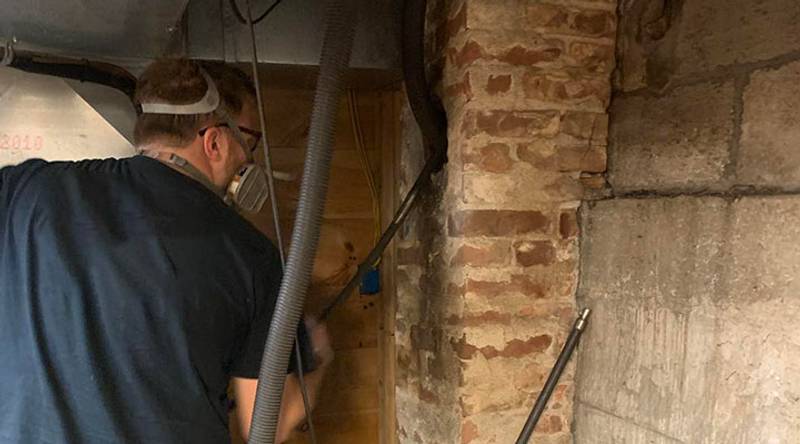
Older St. Louis Homes Hide Serious Chimney Risks
Older St. Louis homes are beautiful — and their chimneys are quietly failing. If your home was built before 1970, chances are the chimney’s never had a modern inspection, and what’s hiding inside ranges from nuisance leaks to conditions that put your family in danger.
The St. Louis metro area is packed with historic housing stock. Neighborhoods like Ferguson, University City, and Florissant are filled with brick homes built between the 1920s and 1960s. Those chimneys are now 60 to 100-plus years old — and age alone isn’t the culprit. The real problem is decades of use, Missouri’s brutal freeze-thaw winters, and building standards that have shifted dramatically since they were built. Most of them haven’t kept pace.
NFPA 211 calls for existing chimneys to be evaluated for their current condition and suitability — not rubber-stamped as safe because they were once up to code. A chimney that passed inspection in 1955 may be a liability today.
This guide covers the most common chimney problems we find in older St. Louis homes, what causes them, and what happens if you leave them alone.
Deteriorated Flue Liners Are the Top Danger
A damaged flue liner is the single most dangerous chimney defect we find in older homes. The flue liner contains combustion gases — including carbon monoxide — and directs heat safely up and out. When it fails, those gases seep through cracks into living spaces, and heat reaches combustible framing.
Many older St. Louis chimneys have clay tile flue liners. Clay tile works fine when intact, but it’s brittle. Decades of thermal cycling — expansion and contraction from heat and cold — crack tiles, separate them, and spall them away. NFPA 211 states that a functioning chimney liner is a fundamental safety requirement for any masonry chimney.
A cracked liner also opens the door for moisture. Water gets in, freezes, expands roughly 9 percent, and accelerates cracking further. A hairline fracture becomes a structural gap.
The risk you’re taking: The Centers for Disease Control and Prevention reports that more than 400 Americans die from unintentional carbon monoxide poisoning every year, with more than 100,000 visiting the emergency room. A compromised flue liner is a direct pathway for carbon monoxide to enter your home — silently.
Your home is over 50 years old? The flue liner has never been video-scanned. You don’t know what’s there. A damaged or deteriorated liner demands immediate attention — not a wait-and-see approach. A chimney inspection shows you exactly what’s happening inside.
Creosote Buildup Turns Chimneys Into Fire Hazards
Creosote buildup is the primary cause of chimney fires in the United States, and older chimneys are particularly vulnerable. According to the CSIA, approximately 25,000 chimney fires occur each year nationwide.
In older St. Louis homes, chimneys were often oversized for modern wood stoves and inserts. An oversized flue runs cooler than it should. Combustion gases cool before reaching the top — and that’s exactly when creosote condenses on flue walls.
Creosote exists in three stages. Stage 1 is light, flaky soot — brush it away with routine sweeping. Stage 2 is a dense, tar-like coating that requires specialized tools. Stage 3 is hardened, glazed creosote that auto-ignites at temperatures as low as 451 degrees Fahrenheit — well within normal fire range.
The NFPA reports that failure to clean chimneys and flues was a factor in 68% of home structure fires involving fireplaces, chimneys, or chimney connectors. Annual chimney sweeping isn’t optional maintenance — it’s your primary defense against a chimney fire.
NFPA 211 calls for cleaning when inspections reveal deposit accumulation that poses a hazard. For homeowners in older homes who burn wood regularly, annual service is often the bare minimum. Need details? Our guide to creosote buildup and what every homeowner should know walks you through what accumulation really looks like.
Spalling Brick and Failed Mortar Joints
Spalling brick and crumbling mortar joints are the most visible chimney problems on older St. Louis homes — and the most commonly ignored. Most homeowners dismiss deteriorating masonry as cosmetic. It’s not.
Missouri’s climate hammers masonry. St. Louis endures dozens of freeze-thaw cycles each winter. Water infiltrates mortar joints, freezes, expands, and blows mortar out. Over years, this process — called spalling — weakens the entire chimney structure. Bricks crack, surfaces flake off, and the chimney begins to lean or separate from the house.
The structural consequences are serious. A chimney must not impose structural loads on other building components it wasn’t designed to support. A chimney that’s lost structural integrity doesn’t just damage itself — it can pull away from the roofline or collapse onto the roof deck.
Watch for these signs:
- White staining on bricks (efflorescence — a sign of active moisture intrusion)
- Gaps in mortar joints wider than a credit card
- Brick faces that are cracked or broken off
- Rust stains from deteriorating flashing or metal components
Tuckpointing — removing deteriorated mortar and replacing it with fresh material — stops this cycle when you catch it early. Our masonry repair service handles everything from minor repointing to full crown reconstruction. For a detailed breakdown of what to watch for, check our post on signs your chimney needs repair.
Waiting costs more. Every winter you skip tuckpointing on active mortar damage, the repair scope expands.
Missing or Damaged Chimney Caps and Crowns
A missing chimney cap is an open invitation for water, animals, and debris to enter your chimney system. It’s one of the cheapest problems to fix and one of the most expensive to ignore.
The chimney cap sits over the flue opening and keeps rain, snow, birds, squirrels, and raccoons out. The chimney crown is the concrete or mortar surface covering the top of the chimney structure itself, sloped to direct water away from the flue. Both fail on older chimneys, and both failures trigger cascading damage.
Without a cap:
- Rainwater enters the flue directly, accelerating liner deterioration and firebox rust
- Animals nest inside the flue, creating blockages — the CSIA identifies animal intrusion as a common cause of chimney blockage affecting all chimney types
- Debris accumulates and restricts draft
Without a functioning crown, water infiltrates the masonry at the chimney’s most exposed point. A cracked crown is the leading entry point for freeze-thaw damage that eventually destroys the upper brick courses.
NFPA 211 addresses caps and spark arresters — their design must promote proper draft while keeping water and debris out. On older homes, we commonly find caps that are completely absent, rusted through, or so undersized they barely cover the flue opening.
Cap and crown repair is simple when addressed early. Left alone, the water damage creates the masonry failures, liner cracks, and interior water damage described elsewhere in this article.
Carbon Monoxide Risk from Blocked or Venting-Compromised Flues
Carbon monoxide is the silent threat that makes every other chimney problem secondary. It’s colorless, odorless, and lethal — and an older chimney with any of the defects in this article can allow it to back-draft into your living space.
The CDC reports more than 400 unintentional CO deaths per year in the United States and more than 100,000 emergency room visits. Many connect to faulty or blocked venting systems. The Consumer Product Safety Commission recommends CO detectors on every level of any home with gas appliances — and that applies equally to homes with gas furnaces venting through older masonry chimneys.
In older St. Louis homes, CO risk comes from several directions:
- Blocked flues from nesting animals, collapsed liner tiles, or debris accumulation
- Negative pressure in tightly insulated homes that causes exhaust to reverse and spill into living areas
- Shared flues — older homes sometimes had multiple appliances venting into the same flue, which causes dangerous back-drafting
NFPA 211 states that when any sign of improper operation appears, the system must be inspected before continued use. Smoke or odor entering the room during a fire is a malfunction. Don’t assume it’s normal for an old fireplace.
If your home has a gas furnace or water heater venting through a masonry chimney, a Level 2 inspection — which includes video scanning of the full flue — is the appropriate evaluation. NFPA 211 calls for a Level II inspection any time an appliance has been changed or when the chimney’s condition warrants it.
Schedule Your St. Louis Chimney Inspection Today
Every week you wait, an older chimney is getting worse — and the problems we find in historic St. Louis homes don’t get cheaper with time. A cracked flue liner that costs hundreds to repair today can become a full relining job worth thousands if ignored through another Missouri winter.
We serve homeowners across the greater St. Louis metro area — from Woodson Terrace and Maryland Heights to Kirkwood, Florissant, and Belleville, IL. We’re licensed and insured, and we donate 10% of every dollar in revenue to charity. Military personnel, first responders, fixed-income households, and non-profit organizations receive 10% off all services.
Call us at (314) 322-7122 to schedule your inspection. Don’t let another season pass without knowing what’s in your chimney.

Joshua Scalf
Owner, Friendly Fire LLC
Joshua Scalf is the owner and lead technician at Friendly Fire LLC, bringing over 6 years of chimney service expertise to the greater St. Louis area.
Frequently Asked Questions
How do I know if my older St. Louis home has chimney problems?
Do I really need a chimney inspection if I rarely use my fireplace?
How much does chimney repair typically cost in St. Louis?
Are chimney problems common in neighborhoods like Ferguson, Florissant, or University City?
Can I just patch chimney problems myself instead of calling a professional?
Need Chimney Service?
Don't wait until a small problem becomes an expensive repair. Friendly Fire serves the greater St. Louis area with honest, affordable chimney services.
Licensed & insured · 10% donated to charity · Military & first responder discounts
Related Articles
Signs Your Chimney Needs Repair: What St. Louis Homeowners Must Know
Ignoring chimney repair signs risks house fires, carbon monoxide poisoning, and costly structural damage. Learn the warning signs St. Louis homeowners can't…
Chimney Inspection Levels Explained: Level 1, 2, and 3
Don't guess which chimney inspection you need. Learn the difference between Level 1, 2, and 3 inspections—and what you risk by skipping the right one.
How Often Should You Get Your Chimney Swept? The Complete Homeowner's Guide
Don't risk a chimney fire this season. Learn exactly how often you should get your chimney swept based on fuel type, usage, and NFPA 211 guidelines.