
Is Your Chimney Leaking? Here's What to Do
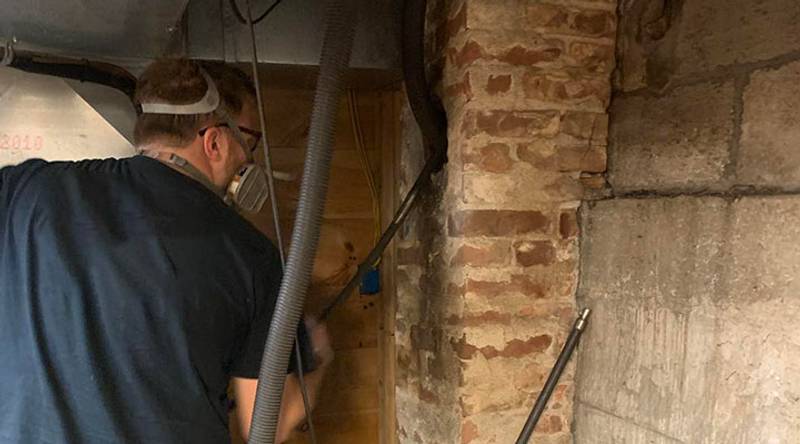
Chimney Leaks Cause Serious Hidden Damage
A leaking chimney isn’t just annoying — it’s one of the fastest ways to turn a manageable maintenance issue into a costly structural repair. Water is the single greatest enemy of any masonry chimney, and in the St. Louis metro area, where wet springs follow hard freezes, the conditions for serious chimney water damage exist nearly year-round.
When water gets into your chimney system, it doesn’t just sit there. It travels. Into mortar joints, behind flashing, into the flue liner, down into the wood framing around your firebox. By the time you notice a water stain on your ceiling or a musty smell near the fireplace, we’ve usually got a serious situation on our hands already.
The good news: chimney leak repair is absolutely manageable when you catch it early. We’ve walked hundreds of homeowners through the warning signs, the most common causes, what a proper repair involves, and how to stop it from happening again. If you suspect your chimney is already leaking, start with a professional chimney inspection — it’s the only reliable way to find every entry point.
We get calls about leaking chimneys from homeowners across the St. Louis metro area and surrounding communities every single year. Don’t wait until the damage forces your hand.
Warning Signs Your Chimney Is Leaking
Water where it doesn’t belong is the clearest sign of a chimney leak — but you’ll often see secondary symptoms long before you find the actual source. Knowing what to look for can save you thousands of dollars in repair costs.
Watch for these warning signs:
- Water stains on ceilings or walls near the chimney, especially after heavy rain
- Efflorescence — white, chalky streaks on the exterior brick caused by water pulling salts out of the masonry
- Rust stains on the damper, firebox, or fireplace surround
- Spalling brick — flaking or crumbling brick faces caused by freeze-thaw expansion
- Musty odors from the fireplace, which can indicate moisture and mold inside the flue
- Deteriorating mortar joints that crumble to the touch
Any one of these signs warrants a call to a chimney professional. If you’re seeing several at once, the damage may already be significant. NFPA 211 §14.7.1 calls for a professional inspection any time evidence of damage is present — and water intrusion clearly qualifies.
For more context on what these symptoms mean, see our guide to signs your chimney needs repair.
The Five Most Common Causes of Chimney Leaks
Most chimney leaks we see trace back to one of five components: the crown, the flashing, the chimney cap, the mortar joints, or the flue liner. Each has a different failure mode and a different repair approach. Identifying the right source is everything.
Cracked or Deteriorated Chimney Crown
The chimney crown is the concrete or mortar slab that seals the top of the chimney around the flue opening. It’s designed to deflect water away from the masonry below. Over time, crowns crack from thermal expansion, freeze-thaw cycling, and simple age. A cracked crown lets water pour directly into the chimney chase — and into your home.
Failed Chimney Flashing
Chimney flashing is the metal (typically lead, aluminum, or galvanized steel) that seals the joint where your chimney meets the roofline. When flashing lifts, corrodes, or separates from the chimney, water runs straight into your attic or wall cavity. We see flashing failure constantly — and it’s one of the most misdiagnosed sources of leaks. Many homeowners blame the roof when the chimney is actually at fault.
Missing or Damaged Chimney Cap
A chimney cap sits over the flue opening and keeps rain, snow, birds, and debris out. Without one — or with a rusted, broken one — your flue is basically an open pipe pointed at the sky. This is the simplest and most preventable cause of chimney water damage.
Eroded Mortar Joints
Mortar joints between the bricks of your chimney are vulnerable to weathering. As mortar erodes, it creates gaps that let water penetrate the chimney’s masonry structure. Water expands by approximately 9 percent when it freezes, widening those gaps every single winter. This is why tuckpointing — removing and replacing damaged mortar — is a critical part of chimney maintenance in Missouri’s climate.
Cracked or Damaged Flue Liner
Your flue liner protects the surrounding masonry and your home’s framing from heat and combustion byproducts. Cracks in the liner can also allow water to seep through the chimney walls. NFPA 211 §14.9 treats damaged or deteriorated liners as a serious safety concern requiring immediate attention — not just because of water, but because of the fire and carbon monoxide risks involved.
How to Diagnose a Chimney Leak Correctly
Guessing at the source of a chimney leak wastes money. The most cost-effective first step is always a professional chimney inspection — ideally a Level II inspection that includes a video scan of the flue interior.
NFPA 211 §14.2 calls for annual inspection of all chimneys for soundness, freedom from deposits, and correct clearances. If you haven’t had one recently, now is the time. The Chimney Safety Institute of America (CSIA) recommends annual inspection and service for all fuel types — including gas.
A proper diagnosis includes:
- External visual inspection — examining the crown, cap, flashing, brick, and mortar from the roofline
- Internal inspection — checking the smoke chamber, damper, and firebox for rust, staining, and deterioration
- Video scanning — a Level II inspection per NFPA 211 §15.4.2.3 involves video scanning the full length of the flue to identify cracks, deterioration, and blockages
- Flashing evaluation — checking the seal between chimney and roof for separation or corrosion
Our detailed guide to chimney inspection levels explains exactly what each type covers and when you need each one. For most active leak situations, a Level II inspection gives you the complete picture.
Without an accurate diagnosis, you risk repairing the wrong component and watching the leak continue. Don’t spend money on masonry work if the flashing is the real problem — and vice versa.
What Chimney Leak Repair Actually Involves
The right chimney leak repair depends entirely on what’s failing. There’s no one-size-fits-all fix. Here’s what each common repair entails.
Crown Repair or Replacement
Minor crown cracks can often be sealed with a flexible crown coat product. Severely deteriorated crowns need to be removed and rebuilt. This is masonry work that requires the right materials — Portland cement alone is not appropriate for chimney crown construction, as it’s too rigid and will crack again quickly with thermal movement.
Flashing Repair or Replacement
Repairing flashing involves removing the old material, cleaning and prepping the chimney and roof surface, and installing new flashing with proper sealing. In some cases, counter-flashing embedded in the mortar joints must be replaced entirely. This isn’t a DIY job — improper flashing installation is the leading cause of chimney leaks in homes that have already had “repairs.”
Chimney Cap Installation
Installing a properly sized chimney cap is one of the highest-value, lowest-cost chimney investments you can make. A quality stainless steel cap protects the flue opening, keeps animals out, and prevents debris accumulation. If your chimney doesn’t have one, this should be at the top of your list.
Tuckpointing and Masonry Repair
When mortar joints have deteriorated, tuckpointing removes the damaged material and packs in fresh mortar to restore the weathertight seal. For more extensive brick damage — spalling, cracking, or structural issues — our masonry repair team can assess what’s needed and restore the chimney to sound condition.
For older St. Louis homes with aging masonry chimneys, check out our guide to common chimney problems in older St. Louis homes for context on what you may be dealing with.
Flue Liner Repair or Relining
If your flue liner is cracked or deteriorating, it may need to be relined. NFPA 211 §7.1.10.1 addresses relining material requirements — the appropriate material depends on the fuel type and appliance. A stainless steel liner insert or a cast-in-place liner system are common solutions. This is one of the more involved and expensive repairs, which is why catching liner damage early through annual inspections matters so much.
Prevent Future Leaks With Waterproofing
Once the underlying causes are repaired, waterproofing your chimney masonry is the best way to prevent future leaks from developing. This step is only effective after all structural issues are resolved — sealant applied over cracked mortar or failed flashing won’t stop water from getting in.
Professional-grade chimney waterproofing uses a vapor-permeable sealant that blocks liquid water from penetrating the brick and mortar while still allowing the masonry to breathe. This matters: standard masonry sealants trap moisture inside, which accelerates freeze-thaw damage. Use only products specifically designed for chimney and masonry applications.
A complete waterproofing treatment, done after proper repairs, can dramatically extend the life of your chimney. Combined with a functioning cap, solid crown, and intact flashing, it gives your chimney a complete moisture defense system.
Annual chimney maintenance — including a chimney sweeping appointment and visual inspection — keeps you ahead of developing issues before they become expensive repairs. The CSIA recommends annual service for all chimneys regardless of how often they’re used. Even a chimney that sat unused all winter can develop crown cracks or flashing issues that allow water intrusion in spring.
For a full seasonal maintenance checklist, see how to prepare your chimney for winter and fireplace maintenance in St. Louis.
Schedule Your Chimney Leak Repair Today
Every week you wait, a leaking chimney is doing more damage to your masonry, your flue liner, and your home’s framing. Water doesn’t take a season off — and in Missouri’s climate, spring rains follow hard winters with almost no break.
We serve homeowners throughout the St. Louis metro area with licensed, insured chimney inspection and repair services. We donate 10% of our revenue to charity, and we offer a 10% discount for military personnel, first responders, fixed-income households, and non-profit organizations.
Call us today at (314) 322-7122 or schedule your inspection online. Don’t let a small leak become a major reconstruction project.

Joshua Scalf
Owner, Friendly Fire LLC
Joshua Scalf is the owner and lead technician at Friendly Fire LLC, bringing over 6 years of chimney service expertise to the greater St. Louis area.
Frequently Asked Questions
What are the most common causes of a chimney leak?
Can I ignore a small chimney leak for now?
How much does chimney leak repair cost?
Do I need an inspection before getting chimney leak repairs in Missouri?
Can I waterproof my chimney myself to stop the leak?
Need Chimney Service?
Don't wait until a small problem becomes an expensive repair. Friendly Fire serves the greater St. Louis area with honest, affordable chimney services.
Licensed & insured · 10% donated to charity · Military & first responder discounts
Related Articles
Chimney Crown Repair: Why It Matters for Your Home and Fireplace
A cracked chimney crown lets water destroy your flue, liner, and masonry. Learn what's at stake and when to act before repair becomes full reconstruction.
Chimney Repair Services in St. Charles, MO: What Homeowners Need to Know
Cracked mortar, spalling brick, or a damaged flue liner can cost you thousands. Get expert chimney repair in St. Charles, MO before small problems become…
Tuckpointing vs Repointing: What's the Difference and Which Does Your Chimney Need?
Confusing tuckpointing and repointing could cost you thousands in chimney damage. Learn the real difference and which repair your St. Louis home actually needs.