
Fireplace Repair in St. Louis: What Homeowners Need to Know Before It's Too Late
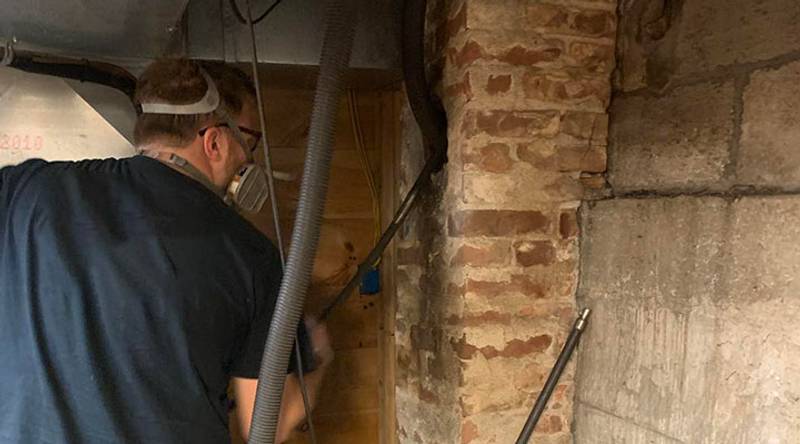
What Fireplace Repair in St. Louis Really Means
Fireplace repair covers a wide range of issues — from repointing cracked mortar joints to replacing a compromised flue liner or rebuilding a damaged firebox. For St. Louis homeowners, the term matters because the right repair depends entirely on what’s failing and why. Catching the difference early can save thousands.
Many homeowners assume their fireplace is fine if it’s still drawing smoke. That’s dangerous. Structural damage can exist without obvious symptoms — and a fireplace that looks fine from the living room may have cracked liner tiles, spalling firebox bricks, or deteriorated mortar joints that create a direct path for heat and carbon monoxide to reach combustible framing.
St. Louis and the surrounding metro experiences harsh freeze-thaw cycles every winter. Water expands by approximately 9 percent when it freezes, and that expansion is what drives the cycle that slowly destroys chimney masonry year after year. A single Missouri winter can turn a hairline crack into a structural problem.
This guide explains the most common fireplace repairs St. Louis homeowners face, how to recognize when you need one, and what the repair process actually involves. If your fireplace has been dormant, recently used heavily, or simply hasn’t been inspected in a few years, read on.
Common Fireplace Problems That Require Repair
The most common fireplace repairs we handle in St. Louis involve deteriorated mortar joints, cracked firebox liners, damaged dampers, failing chimney crowns, and compromised flue liners. Each one poses a distinct risk — and none of them fix themselves.
Cracked or Spalling Firebox Bricks
The firebox is the chamber where the fire actually burns. It takes direct heat abuse every time you light a fire. Over time, the refractory bricks and mortar joints inside the firebox crack, spall, or crumble. A compromised firebox allows heat and flames to contact the surrounding masonry structure, which can cause a house fire without any visible warning from the living room side.
Per NFPA 211, joints in the firebox must be completely sealed to prevent exactly this kind of heat transfer. When those seals fail, use must stop until repairs are made.
Deteriorated Mortar Joints (Tuckpointing)
Exterior mortar joints are exposed to everything Missouri weather throws at them — rain, ice, heat, and humidity. When mortar deteriorates, water infiltrates the masonry. Water causes further freeze-thaw damage, which causes more infiltration, which accelerates the entire cycle. Masonry repair — specifically tuckpointing — is how you break that cycle before it reaches structural brick.
Damaged or Missing Chimney Crown
The chimney crown is the concrete cap that seals the top of the chimney, protecting the masonry from water intrusion. A cracked or missing crown is one of the single most common causes of accelerated chimney deterioration. Water runs directly into the chimney system when the crown fails, saturating the masonry and causing damage that spreads downward over time.
Cracked or Deteriorated Flue Liner
The flue liner is the inner channel that carries combustion gases out of your home. NFPA 211 is direct: damaged or deteriorated liners must be repaired or replaced before the appliance is used again. Cracks in the flue liner allow carbon monoxide, heat, and combustion gases to reach the wood framing surrounding your chimney — a leading cause of house fires.
Faulty Damper
A damper that doesn’t seal properly wastes energy by letting conditioned air escape year-round. One that doesn’t open fully restricts draft and causes smoke to back up into the home. We get calls about damper problems constantly, and replacement is usually a quick fix — but it’s often overlooked until the problem becomes impossible to ignore.
How Inspections Drive Repair Decisions
You cannot accurately diagnose fireplace damage from visual inspection alone. A professional chimney inspection is where the process starts — not an optional add-on.
NFPA 211 calls for annual inspections of all chimneys, fireplaces, and vents. This applies regardless of fuel type or how frequently you burn. For good reason: many of the most dangerous conditions — liner cracks, hidden mortar failure, carbon monoxide pathways — are invisible without a trained eye and the right equipment.
NFPA 211 establishes three inspection levels, and understanding which one applies to your situation matters. A Level I inspection covers accessible portions of the system and is appropriate for routine annual checks. A Level II inspection is what we call for when something has changed — after a chimney fire, before a real estate transaction, or after any event that could have caused damage. A Level III inspection is reserved for suspected concealed structural damage.
Our post on chimney inspection levels explains the differences in detail.
“Failure to clean was a factor in 68% of home structure fires involving fireplaces, chimneys, or chimney connectors.” — National Fire Protection Association [NFPA-001]
If you’re not sure which level applies to your situation, start with a Level I and let the inspector determine if more is needed. What you can’t afford to do is skip it entirely.
Warning Signs That Demand Immediate Attention
Certain fireplace symptoms should stop you from burning until a professional has assessed the system. These are not “watch and see” situations — they’re red flags that mean the fireplace is potentially unsafe right now.
Stop using your fireplace and schedule an inspection if you notice any of the following:
- White staining (efflorescence) on the exterior chimney — a sign that water is moving through the masonry
- Smoke entering the room during or after a fire — indicates a draft problem, blockage, or damaged damper
- Visible cracks in the firebox walls or floor — indicates refractory failure requiring repair before next use
- A strong odor from the fireplace when not in use — can indicate creosote buildup or animal intrusion
- Rust staining around the firebox or damper — indicates chronic moisture infiltration
- Loose or falling bricks anywhere in the chimney or firebox — a structural issue requiring immediate repair
Our post on signs your chimney needs repair covers each of these warning signs in greater detail.
The Chimney Safety Institute of America notes that approximately 25,000 chimney fires occur each year in the United States [CSIA-003]. Most are preventable. The fires that do occur almost always involve either a lack of maintenance, creosote buildup, or an undetected structural defect — the exact problems that repair and annual inspection catch before they ignite.
The Fireplace Repair Process: What to Expect
Most fireplace repairs follow a clear, predictable process — inspection, diagnosis, written estimate, repair, and re-inspection. Understanding the steps makes the whole experience less stressful.
Step 1: Professional Inspection
Before any repair work begins, a certified technician inspects the fireplace and chimney system. This means examining the firebox, damper, smoke chamber, flue liner, chimney crown, flashing, and exterior masonry. Depending on what’s visible, the tech may recommend a camera scan of the flue to check for liner damage.
Step 2: Written Diagnosis and Estimate
A reputable company provides a written scope of work. You should understand exactly what is being repaired and why before authorizing any work. Ask your technician which repairs are safety-critical and which are maintenance items that can be phased.
Step 3: Repairs Are Performed
Common repairs we handle include:
- Tuckpointing deteriorated mortar joints with appropriate refractory mortar
- Firebox repair using refractory cement or replacement firebrick
- Chimney crown repair or replacement to stop water infiltration
- Flue liner relining using a stainless steel liner or cast-in-place system
- Damper repair or replacement to restore proper draft and sealing
- Chimney cap installation to prevent water, animals, and debris from entering
Step 4: Follow-Up Inspection and Sweep
After structural repairs, a chimney sweep removes any debris or creosote before the fireplace is returned to service. NFPA 211 calls for cleaning and repairs to address any deficiencies found during inspection. This step closes the loop and confirms the system is ready to use safely.
We’ve worked with homeowners throughout the St. Louis metro area who have older homes where the fireplace hasn’t been formally inspected in years — or ever. In those cases, starting with a thorough inspection is the most important thing you can do.
When Repair Isn’t Enough: Considering a Fireplace Insert
Sometimes the most practical solution isn’t repairing an aging open fireplace — it’s upgrading it with a fireplace insert. This is especially true when a fireplace is structurally sound but thermally inefficient, or when the cost of restoration approaches the cost of a full insert installation.
Open fireplaces are notoriously inefficient. Most traditional open fireplaces lose over 90 percent of the fire’s heat out the chimney [EPA-001] — the strong draft actually pulls heated room air out of your house while the fire burns. That’s money leaving through your chimney every time you light a fire.
EPA-certified wood-burning fireplace inserts operate at 60 to 80 percent efficiency [EPA-002] — a dramatic improvement over the open fireplace they replace. Gas and pellet inserts offer similar or better performance with different fuel trade-offs.
An insert is also worth considering from a home value perspective. A 2016 Angi survey found that 77 percent of potential home buyers were willing to pay more for a home with a working fireplace [ANGI-001]. Redfin data shows homes with fireplaces are listed at approximately 13 percent more than the national median [REDFIN-001]. A well-functioning, efficient fireplace is an asset — a broken-down or inefficient one is a liability at resale.
Our post on how fireplaces and inserts increase home resale value walks through the financial case in more detail.
If your fireplace is marginal — functional but costly to restore fully — talk to your technician about whether an insert might offer better long-term value than a major repair investment.
Schedule Your Fireplace Repair Inspection Today
Every season you burn in an uninspected, unrepaired fireplace is a season you’re gambling with your home and your family’s safety. The cost of ignoring fireplace damage doesn’t stay flat — it compounds every winter as freeze-thaw cycles widen cracks, water infiltrates deeper into the masonry, and creosote accumulates in a flue that may already be compromised.
Friendly Fire Chimney serves the greater St. Louis metro. We’re licensed and insured, and we donate 10% of every dollar of revenue to charity. We also offer a 10% discount for military personnel, first responders, fixed-income households, and non-profit organizations.
Call us at (314) 322-7122 to schedule your fireplace inspection. Don’t wait until you’re smelling smoke in your living room or finding crumbled brick in your firebox — by then, the repair bill is already larger than it needed to be.

Joshua Scalf
Owner, Friendly Fire LLC
Joshua Scalf is the owner and lead technician at Friendly Fire LLC, bringing over 6 years of chimney service expertise to the greater St. Louis area.
Frequently Asked Questions
How do I know if my fireplace needs repair?
How much does fireplace repair cost in St. Louis?
Is it safe to use my fireplace if it has a small crack?
How often should St. Louis homeowners have their fireplace inspected?
Do I need a repair or just a cleaning?
Need Chimney Service?
Don't wait until a small problem becomes an expensive repair. Friendly Fire serves the greater St. Louis area with honest, affordable chimney services.
Licensed & insured · 10% donated to charity · Military & first responder discounts
Related Articles
Chimney Maintenance in St. Louis: The Complete Homeowner's Guide
Skip chimney maintenance in St. Louis and risk chimney fires, carbon monoxide leaks, and costly repairs. Learn what your chimney needs—and when—to stay safe.
Complete Chimney Services in St. Louis: What Every Homeowner Needs to Know
Don't risk a chimney fire or carbon monoxide leak. Discover the complete chimney services St. Louis homeowners need to stay safe — and what you're losing by…
Chimney Repair Services in St. Charles, MO: What Homeowners Need to Know
Cracked mortar, spalling brick, or a damaged flue liner can cost you thousands. Get expert chimney repair in St. Charles, MO before small problems become…